2012年10月14日日曜日

Class Supplement, 早稲田AO, Extra Qestions, Russel and the Internet


Read the following excerpt and answer the questions.
 
The Conquest of Happiness, Chapter Nine: Fear of Public Opinion, Bertrand Russell
 
In the Modern world, owing to the swiftness of locomotion, people are less dependent than they used to be upon their geographically nearest neighbors. Those who have cars can regard as a neighbor any person living within twenty miles. They have therefore a much greater power than was formerly the case of choosing their companions. In any populous neighborhood a man must be very unfortunate if he cannot find congenial souls within twenty miles. The idea that one should know one’s immediate neighbors has died out in large centers of population, but still lingers in small towns and in the country. It has become a foolish idea, since there is no need to be dependent upon immediate neighbors for society. More and more it becomes possible to choose our companions on account of congeniality rather than on account of mere propinquity. Happiness is promoted by associations of persons with similar tastes and similar opinions. Social intercourse may be expected to develop more and more along these lines, and it may be hoped that by these means the loneliness that now afflicts so many unconventional people will be gradually diminished almost to vanishing point. This will undoubtedly increase their happiness, but it will of course diminish the sadistic pleasure with the conventional at present derive from having the unconventional at their mercy. I do not think, however, that this is a pleasure which we need be greatly concerned to preserve.
 
Fear of public opinion, like every other form of fear, is oppressive and stunts growth. It is difficult to achieve any kind of greatness while a fear of this kind remains strong, and it is impossible to acquire that freedom of spirit in which true happiness consists, for it is essential to happiness that our way of living should spring from our own deep impulses and not from the accidental tastes and desire of those who happen to be our neighbors, or even our relations. Fear of immediate neighbors is no doubt less than it was, but there is a new kind of fear, namely, the fear of what newspapers may say. This is quite as terrifying as anything connected with medieval witch hunts. When the newspaper chooses to make a scapegoat of some perhaps quite harmless person, the results may be very terrible. Fortunately, as yet this is a fate which most people escape through their obscurity; but as publicity gets more and more perfect in its methods, there will be an increasing danger in this novel form of social persecution. This is too grave a matter to be treated with disdain by the individual who is its victim, and whatever may be thought of the great principle of the freedom of the press, I think the line will have to be drawn more sharply than it is by the existing libel laws, and anything will have to be forbidden that makes life intolerable for innocent individuals, even if they should happen to have done or said things which, published maliciously, can cause them to become unpopular. The only ultimate cure for this evil is, however, an increase of toleration on the part of the public. The best way to increase toleration is to multiply the number of individuals who enjoy real happiness and not therefore find their chief pleasure in the infliction of pain upon their fellow men.
 
 
1.    This passage was written around 1930. The author says, “Social intercourse may be expected to develop more and more along these lines, and it may be hoped that by these means the loneliness that now afflicts so many unconventional people will be gradually diminished almost to vanishing point.” Has this prediction come true? If so, how?


2.    Has social media such as SNS increased the “fear of public opinion”?


3.    The author says that doing what you really want to do will lead to real happiness and, in turn, tolerance to others with different tastes and opinions. Do you think globalization of communication will contribute to this process?


4.    What other aspects of society than those written in the passage has social media had its influence on?


Sample answers
 
1.    I think the author’s prediction has come true, especially since the advent of the Internet, which provides opportunities to contact and bond with people across the world. This makes it easier to find someone sharing the same tastes and ideas and those with new ideas will also have more chances to find people who have the same kind of new ideas and opinions as theirs.
 
2.    Unfortunately, social media is a double edged sward and has increased the fear of public opinion. Compared to the era of newspapers, the speed and scale of the information circulation is exponential. A rumor can be literally shared by people all over the world in a second. Also, what is transmitted is not only words and pictures but also video and sound; hence, egregious harassments which were unthinkable before keep ruining the lives of targets, many of whom commit suicides. Moreover, anonymity protected by the system has increased the possibility of anyone becoming victims. Therefore, few can be indifferent to scapegoating now. 
 
3.    a. I understand Russell believes that people who enjoy inflicting pain on others, especially those who are different, are also oppressed and can liberate their mind by listening to the true voice of their heart as technology helps them open their eyes and see the outer world, and I agree with him. Things have been improving gradually as technology and media expose us to more information than before. For example, living together before marriage had to be done in discreet 30 years ago, but now it can be talked about openly as more people share many more ideas about happier marriage and relationship. Female managers, single mothers, and gays are less discriminated against than they were 15 years ago as more people came out and/or reported their plight on the net. Changes in public opinions have been taking place in many aspects of life and society. It can be said that the more accessible information becomes, the freer and happier people will become, which will reduce our desire to oppress those who act differently.
 
b. I doubt that globalization of communication will liberate people mentally and make them more open-minded. You can lead a horse to the river but cannot force it to drink. For example, people who hate a particular group of people proliferate despite this flood of information. Neo-Nazis, KKK, violent right-wingers, or Islamic extremists still exist, and even seem to be increasing in their numbers. Preconception or dogma often make some people blind and lose natural respect to others regardless of the reality they face. Moreover, unlike TV or newspaper, which provide varieties of information one-sidedly for better or worse, the Internet tends to learn your taste and narrower the range of information supply, excluding what you are not interested in or dislike. This system of filtering information can be producing more narrow-minded individuals than before. I think technology will contribute to freeing the mind of only those who are ready to be freed.
                                                                                          
4.    mass movements of huge scale (e.g. Arab Spring, Occupy Wall Street, mass movements on environmental issues in China)
decentralization of information management (e.g. WikiLeaks (a whistle-blowing site which allow people who happen to find injustice in governments or huge corporations to report it anonymously, spread of information through Twitter and Facebook before official announcement, blogs supplementing or replacing editorials and Op-Ed, new business opportunities for individuals and small businesses)
grass-roots relief operations and researches (e.g. the Great East Japan Earthquake victims and radiation level researches, data collection)

Class Supplement, 早稲田AO, Keeping a closer watch on the sun


解答のポイント

主題: 太陽の黒点観察により太陽嵐の活発化を予測できる。太陽嵐はハイテクネットワークに障害をもたらす可能性がある。また、今後、太陽からの熱がどの程度地球を暖める(または冷やす)のかを測定し、地球温暖化にどの程度影響するのかを測定しようとしている。いずれにせよ、太陽エネルギー量の変化よりも人類によるCO2排出のほうが温暖化への影響が大きいことは明らかだ。

本文該当箇所 第1段落最後 Sunspots, vast dark areas on the sun created by strong magnetic fields beneath its surface, provide a visual guide to the evolution of the solar cycle, appearing in large numbers at the time of maximum activity and all but disappearing during the minimum. 3段落 More worryingly, if the geomagnetic storm is violent enough, it can interfere with e high-technology networks on which advanced economies increasingly depend. 4段落 Now that solar activity appears to be on the rise again, scientists are trying to work out when the next peak will occur, how severe it will be, and how long it will last. 5段落 For more than two centuries, scientists have wondered how much heat and light the sun sends out, and whether this energy varies enough to change the Earth’s climate. 6段落 The contribution to the Earth’s rising temperatures of the increase in greenhouse has emission thus appears far greater than that of any changes in the sun’s energy output that we know about so far.


問1 別プリント参照


問2 下線部「先進経済大国が頼るハイテクネットワーク」の利点と危険性とはなんですか。適切な理由と具体例を挙げながら、英語を使って自分の言葉でこの問題について述べなさい。

考え方  3段落後半の磁気嵐による被害例から、ハイテクネットワークの性格を考え、利点と危険性の具体例を考える。

本文該当箇所 Electricity supply grids, satellite navigation, air transportation, financial services and radio communications, including mobile-phone networks, could all be disrupted for hours or even days. 電気供給網や人工衛星によるナビゲーション、空輸、金融サービス、携帯電話ネットワークを含む無線によるコミュニケーションが何時間、何日間も混乱する可能性がある。

解答のポイント例 good pointsspeedy (transactions are processed in a second), can handle things in large amounts (thousands of pages of documents can be sent digitally, occupying no space, sending messages to hundreds of addresses at the same time), cost efficient (requires less paper, transportation fee, or time), new types of events on the global scale (concerts, donations, protests, etc.)

danger incredibly huge damage because of all businesses and institutions being connected in one network, chain reaction, difficulty of recovery if there is no back-up or hard copy


問3 「これは論争となっている問題である」という下線部で筆者が言いたいことを英語を使って自分の言葉で説明してください。 

考え方  「これ」の内容を正確に説明し、どうして「論争」になるのかを説明する。下線部の後に説明があり、気候変動(地球温暖化)との関連性の有無が論点であることを示しているので、「温暖化」問題の重要性を意識して答える。

本文該当箇所 第5段落 For more than two centuries, scientists have wondered how much heat and light the sun sends out, and whether this energy varies enough to change the Earth’s climate. 2世紀以上にもわたり、科学者たちは、太陽がどのくらい熱と光を放出しているのか、そしてこのエネルギーが地球の気候を変化させるのに十分なほど変化するのかどうかを気にかけてきた。6段落 However, the recorded variations in solar irradiance are small, prompting many scientists to conclude that, in recent decades at least, the emission of rapidly rising amounts of greenhouse gases from human activity is a far more important factor in explaining global warming. しかし、記録された太陽放射照度の変化は小さく、多くの科学者は、少なくとも最近の数10年間は、急増している人間の活動による温暖化温室効果ガス放出量のほうが地球温暖化を説明するはるかに重要な要因だと結論している。

解答のポイント例 The relationship between the variation of the sun’s energy release and the Earth’s climate change is controversial because it can change the course of energy policies. To think about an extreme case, if the energy from the sun becomes strong or weak enough to make the Earth dramatically hotter or colder, it might be useless to talk about reducing CO2 emissions because, whatever we may do or may not do, the temperature will rise or fall and change the climate. This idea would allow oil companies to continue to dig out fossil fuels. Thus, this issue could be used as an excuse to neglect to keep an eye on our activities affecting greenhouse effect. Since it is related to our duty to escape or lessen the impact of future disasters, the extent of the effect of the sun’s energy on the Earth is taken seriously in debate.

2012年9月19日水曜日

Class Supplement: 早稲田AO Extra Questions


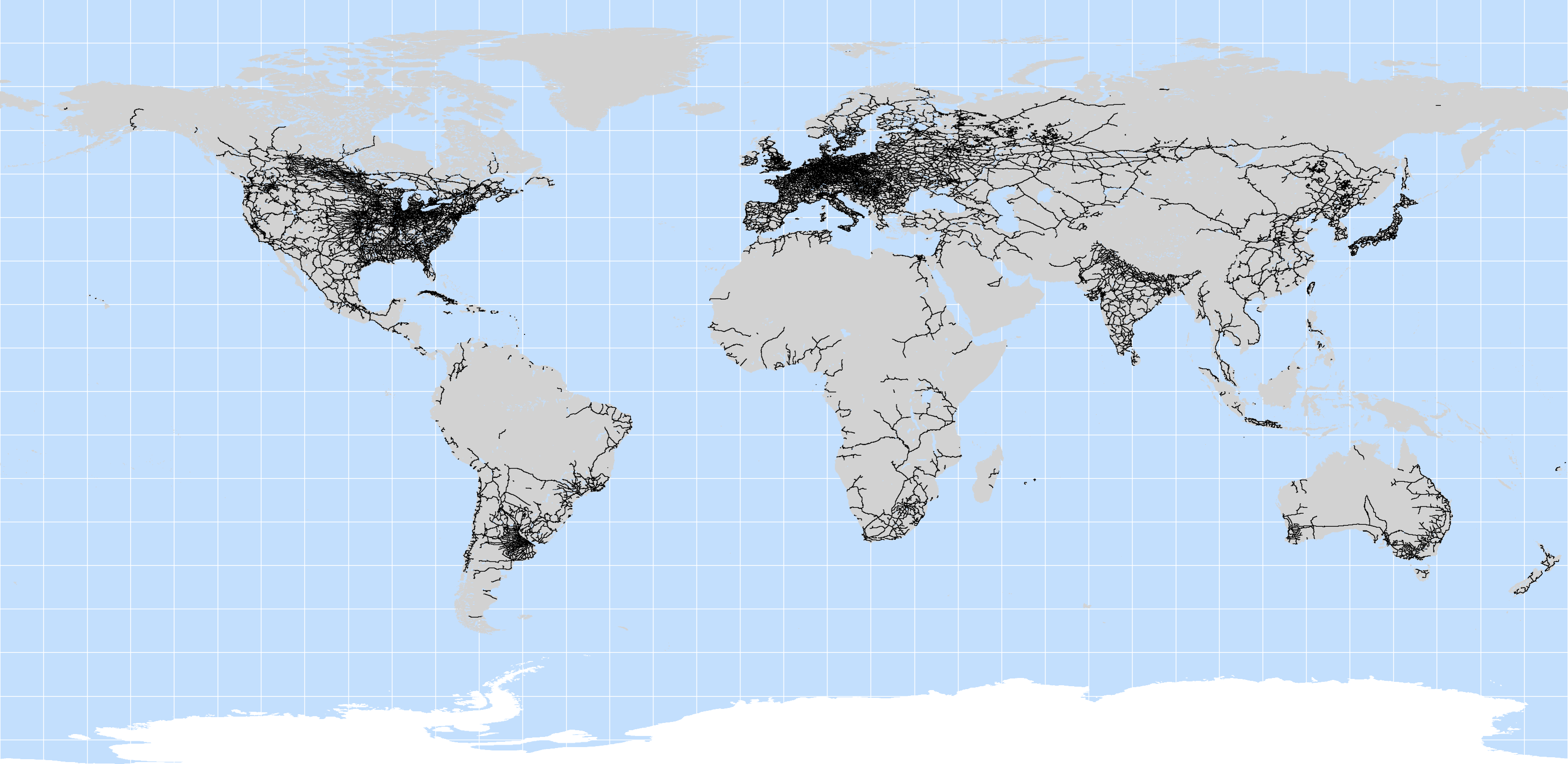
This map is taken from a website entitled World Map of Railways. Take a look at it and answer the following questions.


1.    Focusing on Africa and India, write a paragraph explaining what you can learn from this map concerning development.


2.    Discuss what aspects other than infrastructure are necessary to fight poverty.


Answer Keys

Excerpts from Common Wealth Economics for Crowded Planet, Jeffrey D. Sachs

pp.227-228

Unlike the Eurasian landmass, sub-Saharan Africa is inherently isolated by the Sahara and by the lack of rivers navigable from the ocean to the interior. Moreover, the colonial powers did not build much infrastructure in the interior of Africa. In India, the British raj constructed a thorough rail network often connected to rural roads, in part to bring India’s rural cotton production to British factories. In Africa, by contrast, rails were not built to reach villages but rather a few diamond and gold mines. The result was not a rail network but some disconnected rail capillaries that reached only a tiny proportion of Africa’s rural population.


pp. 229-231

The poor know what to do but are too poor to do it. Since they can’t meet their immediate needs (food, safe water, health care) they also can’t afford to save and invest for the future. That is where foreign assistance comes in. A temporary boost of aid over the course of several years, if properly invested, can lead to a permanent rise in productivity. That boost, in turn, leads to self-sustaining growth. The logical chain is the following:

Temporary aidBoost of productivityRise of saving and investmentSustained growth


The escape from extreme poverty requires four basic types of investment. The first is a boost to productivity of the core livelihood, agriculture. This is the hallowed Green Revolution that initially lifts smallholder farmers out of subsistence. The second is health, including control of the main killersinfection, nutritional deficiencies, and unsafe childbirththrough the provision of preventative and curative health services. The third is education, which ensures that households develop the requisite skills to navigate the local global economy. The fourth is infrastructure, essential for productivity in every sphere, including power, roads, safe water for drinking and sanitation, phone and Internet connectivity, and port services. The boost of farm production has very often been the deus ex machina that triggers the long term growth process. It is also a process that often starts with outside help, as when the United States funded the initial research and many of the inputs (improved seeds and fertilizer) that went into India’s Green Revolution, which began in the second half of the 1960s. In the urban areas, the initial investment will not support agriculture but rather manufacturing or services. Perhaps the trigger to growth will be improved roads that facilitate trade or an improved port that permits the start of an apparel sector or a power plant that provides vital power for factory production. Whatever the particular investment, the concept is the same: raise productivity above subsistence in order to trigger a self-sustaining process of economic growth.


1.    Focusing on Africa and India, write a paragraph explaining what you can learn from this map concerning development.


I can learn from this map that whether a country has its infrastructure in place or not can be related to its development. Africa, the world’s poorest continent, has few railway networks except in South Africa and countries up in the north, while India, which is now regarded as an emerging economy, has railways which are as closely woven as those in many developed nations such America and Spain. This contrast between these two countries which share the same kind of history mainly of colonization, independence after WWII, and epidemic poverty tells that the existence of railways can be a factor that have decided the fortune of them. When India put its foot in the door of development with the development of IT industry and globalization, it had an established system of transportation the British had left which was ready to accommodate the needs to move materials and people quickly and in large amounts, and we know the rest of the story. Africa, on the other hand, has almost no facilities to provide necessities such as food, medicine, and materials throughout the countries, which hampers the efforts for development.


2.    Discuss what aspects other than infrastructure are necessary to fight poverty.


The key to successful fight against poverty is to assist the poor out of the vicious cycle of subsistence by making them able to support themselves and develop their community by themselves. To help start their self-sustaining growth, developed countries can assist them in three areas other than helping build their infrastructure.

1)    assistance in agriculture:

to help them out of food shortage through provision of technology and skills

2)    assistance in health care:

to help them eliminate preventable deaths but providing basic healthcare which most developed countries enjoy  as if it is part of fundamental human rights

3)    assistance in education:

to help their children receive proper education so that they can contribute to de development of the community


2012年8月7日火曜日

Class Supplements, TOEFL iBT, Independent Essay Writing, Money for military or other purposes, The country I would like to visit on a two-week trip, Is it ok for teachers to express their political belief in class?

Writing Topic A: Some people think it is important for a country to maintain a strong army in case of war. Others think it is better for a country to spend money and energy on other things than the military. Do you feel that your country should have a strong army?


Hints for points

Yes:

neighboring countries (China, South Korea, and ASEAN countries) getting wealthier and spending more money on their military

America getting less wealthy

The threat of North Korea


No:

less chance of war than before (strong economic and political relationships with America, China and other countries)

doubt about solution of international conflicts by military power (Vietnam, Afghanistan and Iraq, “war on terror”)

Article Nine as a soft power

the Japan-U.S. Security Treaty (American military bases in Japan)

other priorities (global warming, sagging economy, aging society, need for more research and development of science and technology)


Writing Topic B: In your school schedule, you are required to take an extra class in one of the following subjects: 1) physical education (sports and exercise activities), 2) home economics (cooking or sewing), or 3) current events (the study of topics from recent news stories). Which one of the three subjects would you choose to study?


Hints for points

Physical Education: keep in good shape, opportunities to try unfamiliar sports, refreshment, make friends

Home Economics: independence, to understand the world at the level of household (the basic unit of society)

Current Events: to understand what is going on in the world

related to many important aspects of our society such as economy, politics, and history

area that TV reports do not constantly cover in detail (especially international affairs)


Extra Writing Topic: School teachers, whether they work for public or private schools, should not express their opinions on current politics.


Hints for points

Yes:

1.    In practice, contracts between teachers and the schools they work for prohibit them from taking a stand in politics, and teachers should follow the agreement they made when hired.


2.    Teachers should be the conveyers of the consensus of the public. They should inform students of a variety of, well-balanced views, not a slanted, personal view.


3.    Having a radical political view is a stepping stone in any place, including universities, on this world. Therefore, it is unthinkable and unacceptable for teachers, who are responsible for their students future careers, to affect their students’ political views.


No:

1.    As long as they clearly say to their students that what they say is only a private view, it is ok.


2.    Except for young children, who are still vulnerable to brainwash, students know better than to believe everything their teachers tell them. They take their teachers’ opinions as one of the many.


3.    There is no neutral view, and, if any, such sterilized statements as those found in textbooks approved by the government would be the worst teaching materials in class, where a human beings of two different generations struggle to make the most of the given time for the better future, which requires realistic understanding of the past and the present.